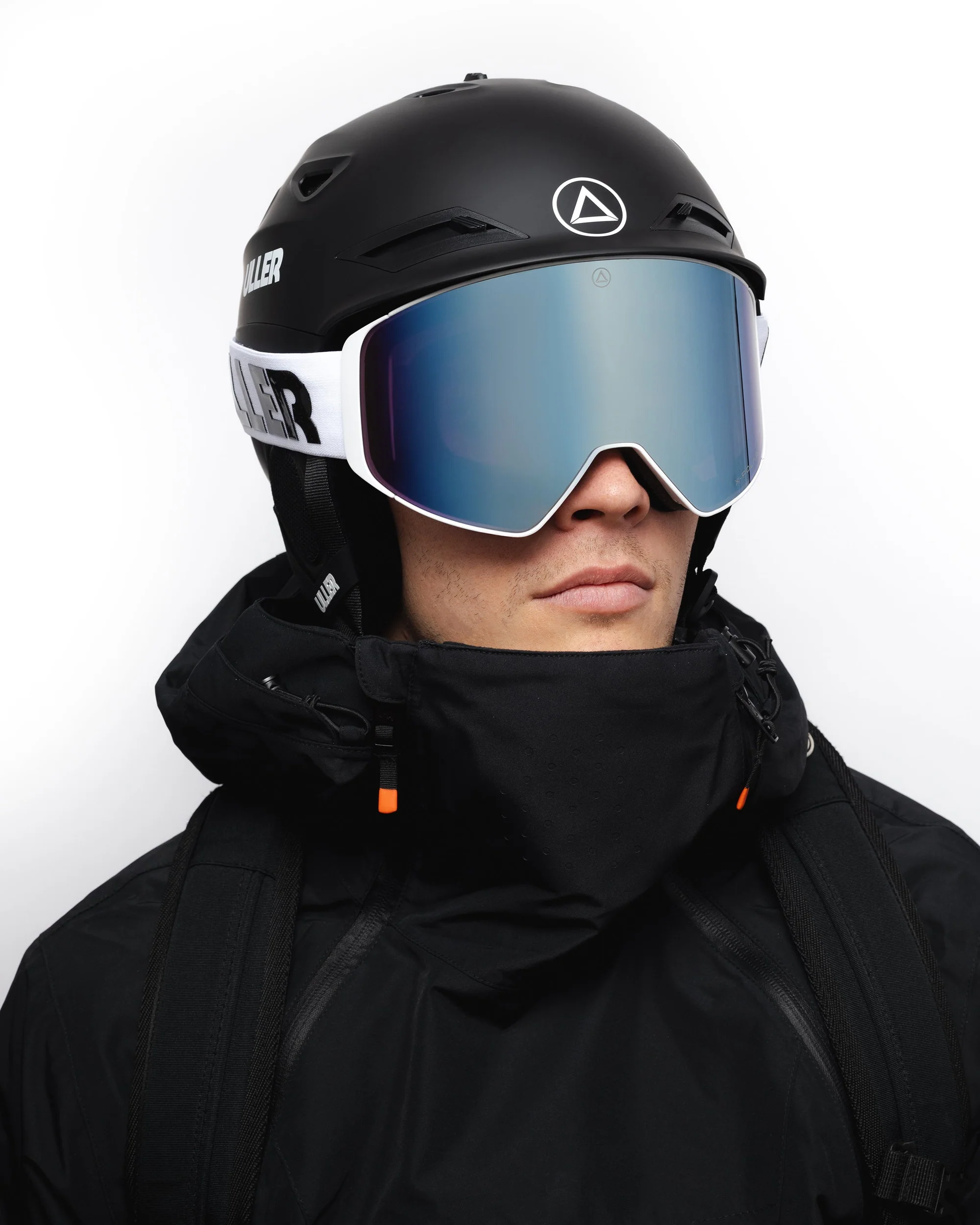
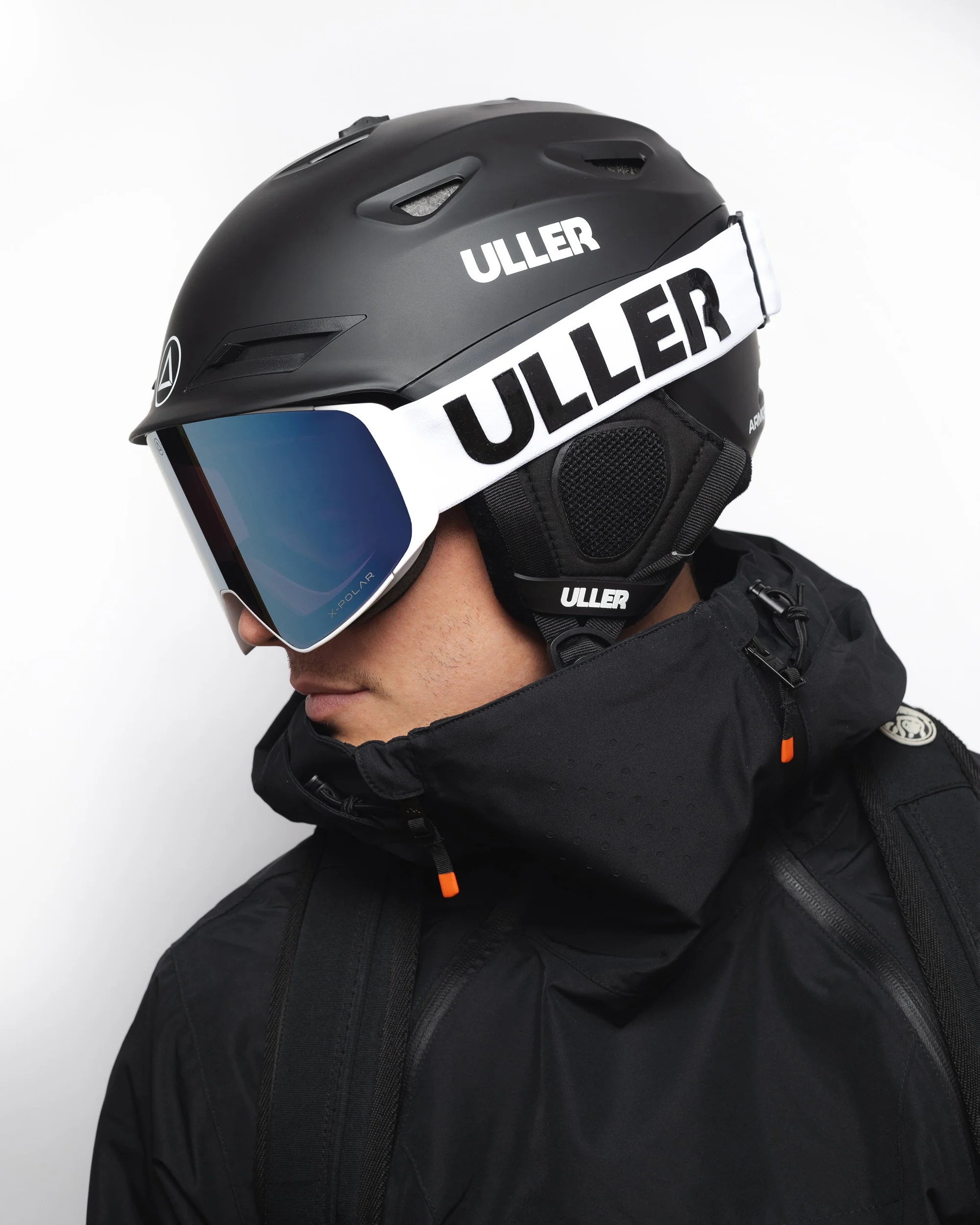
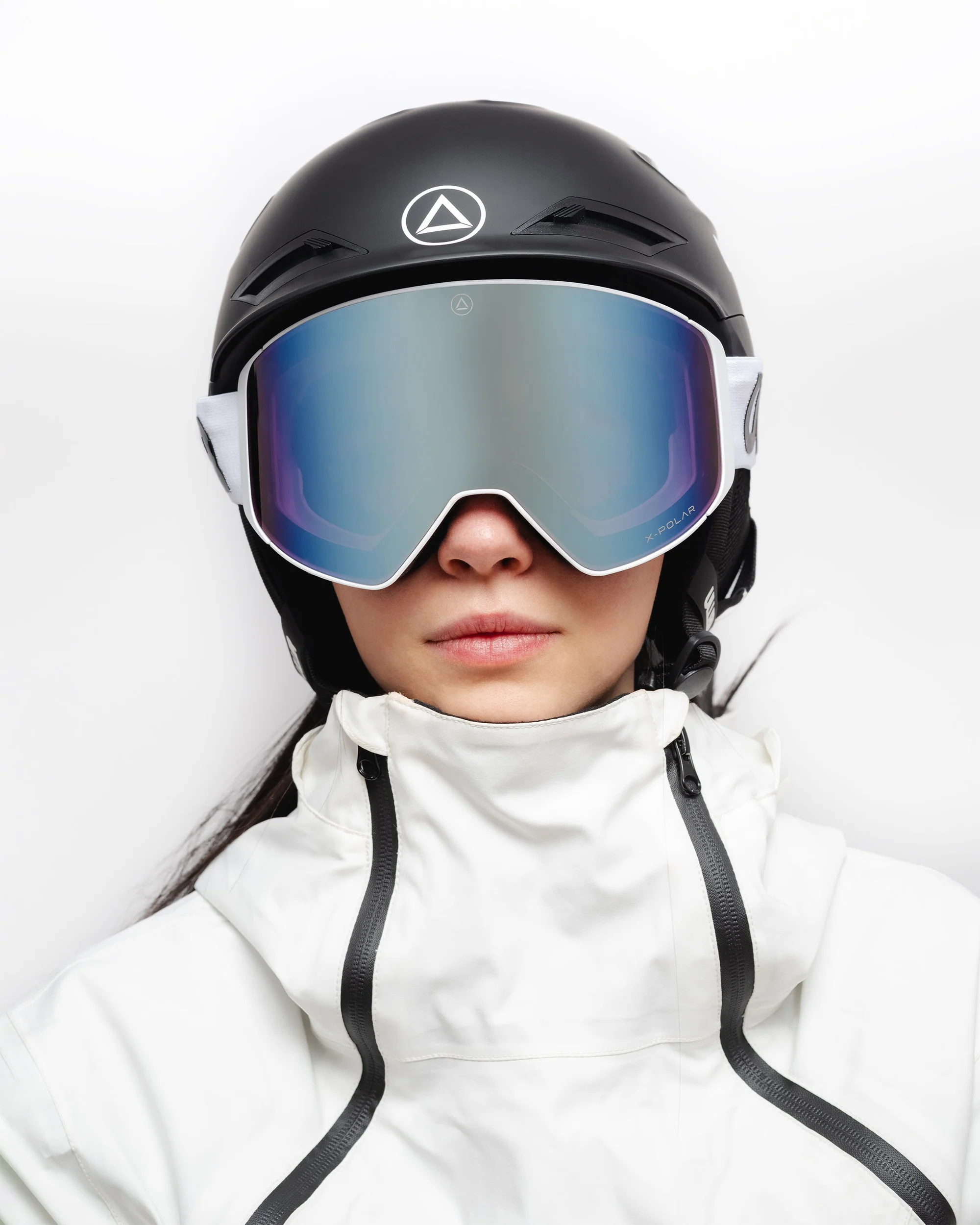
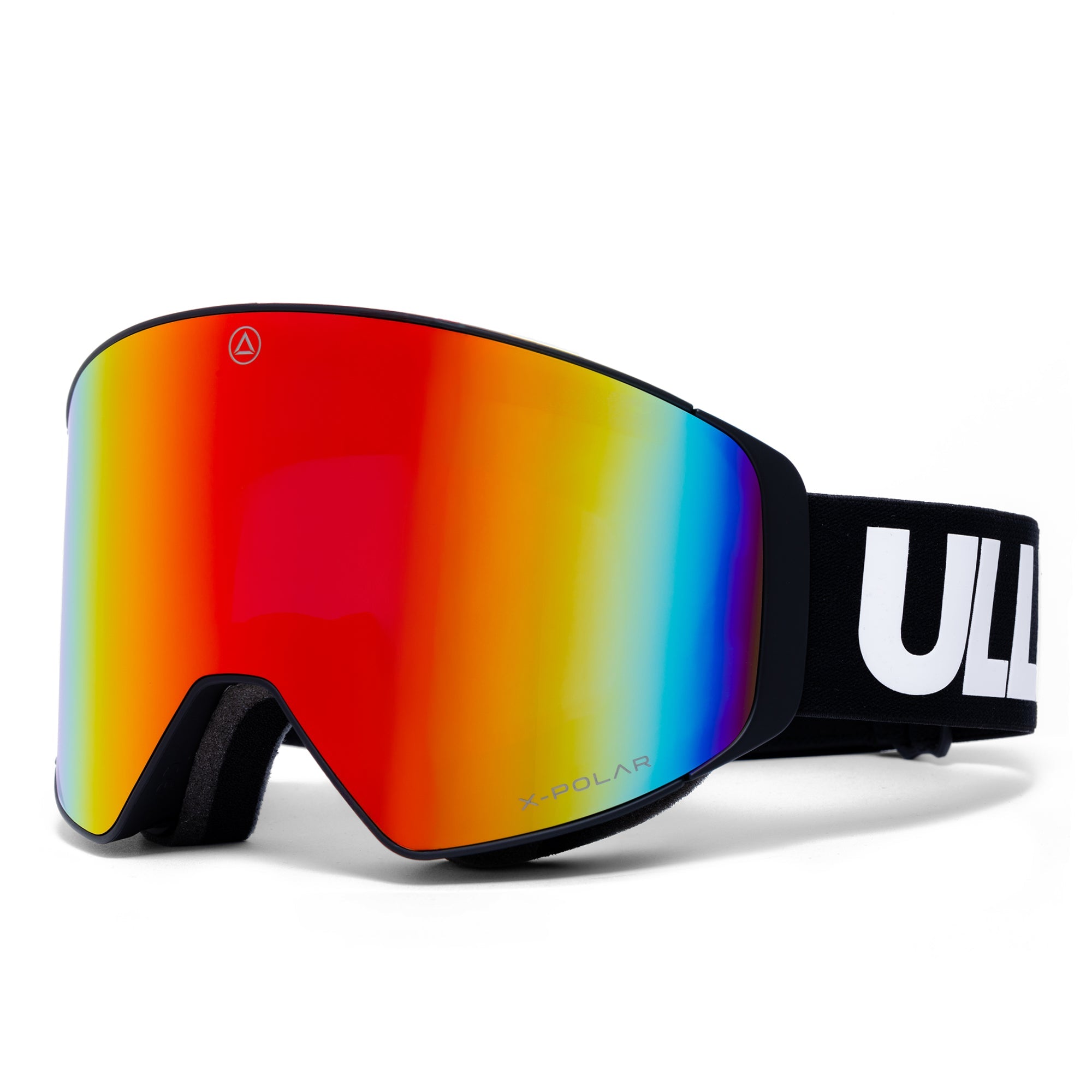
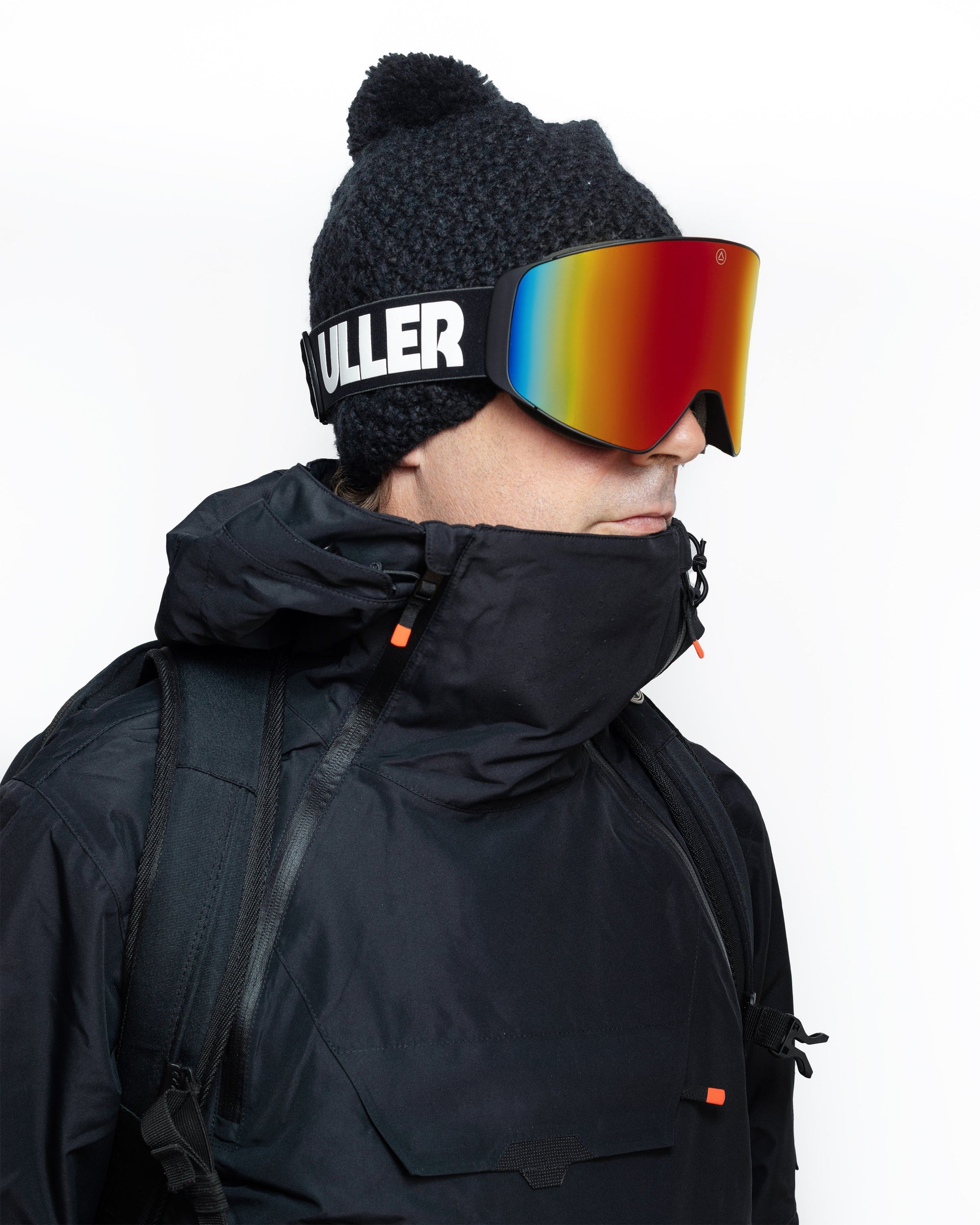
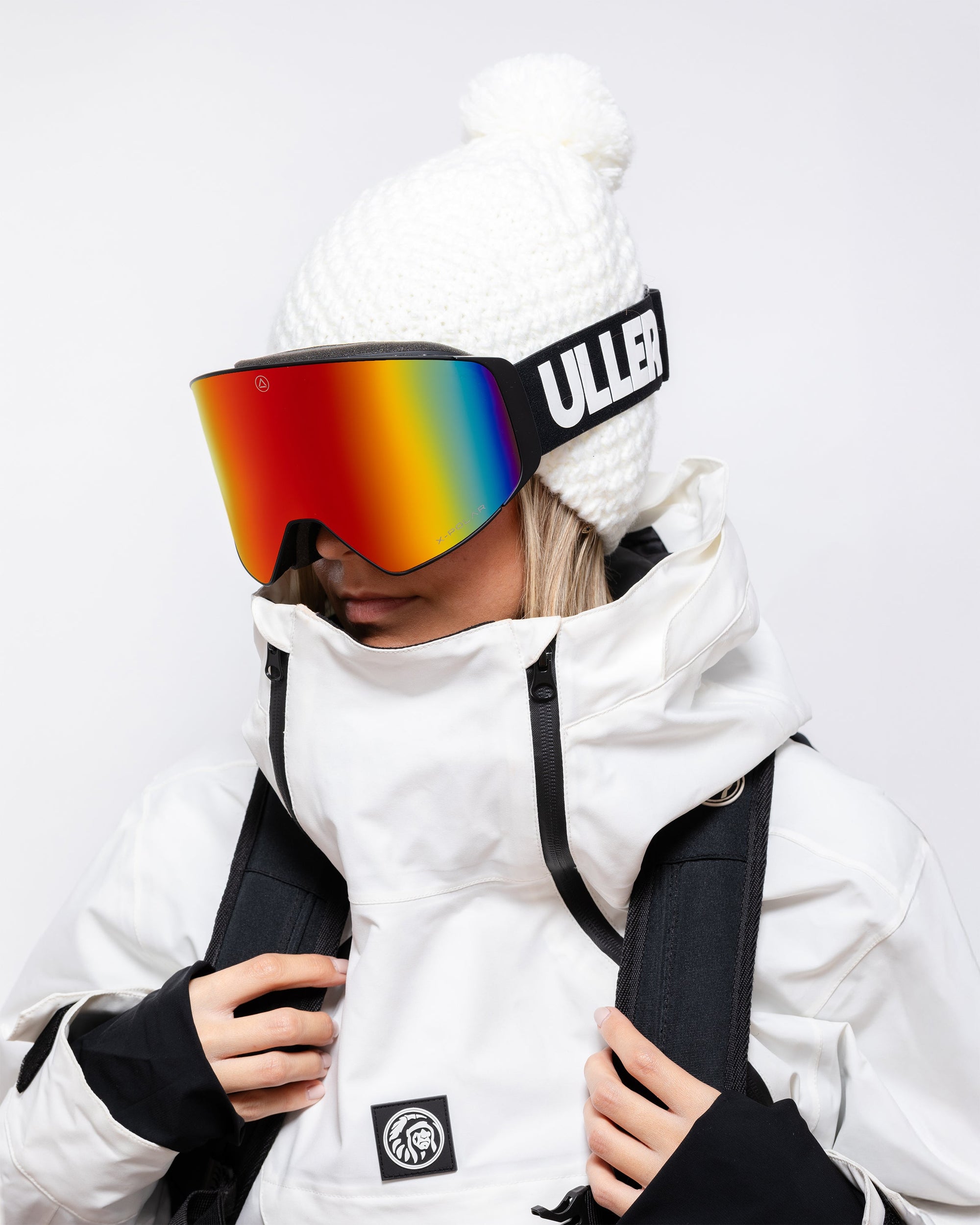
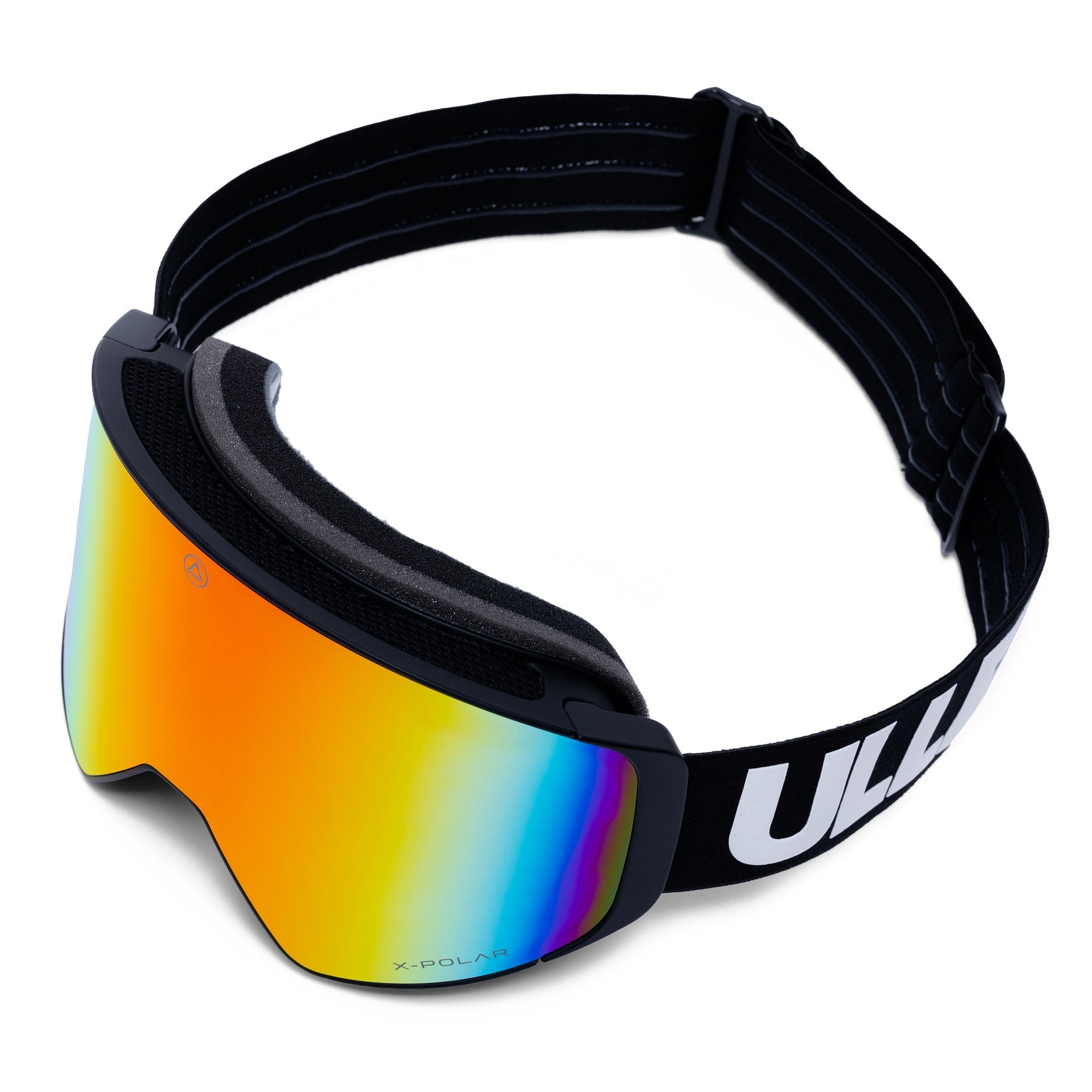
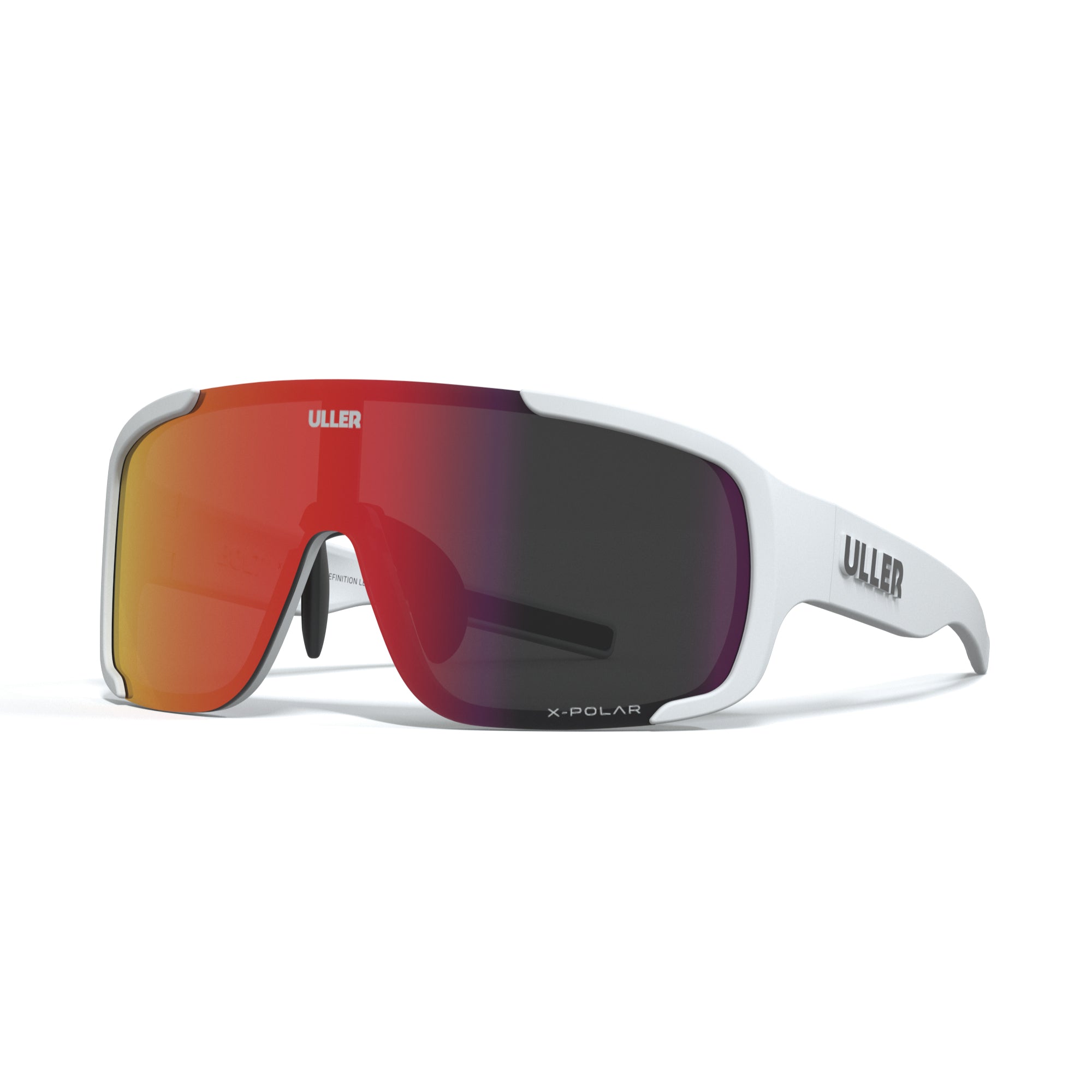
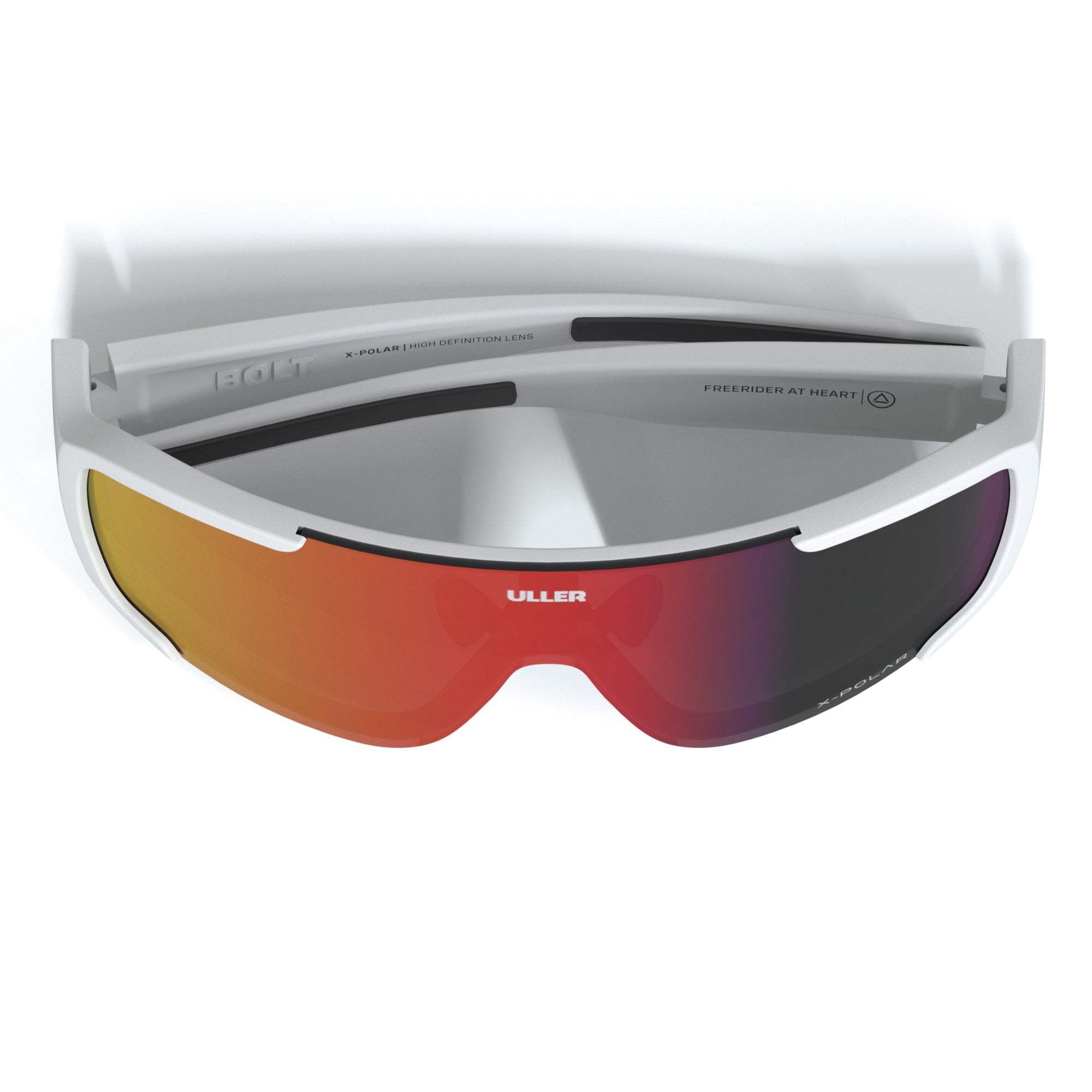
On the mountain, vision is not a detail. It is a tool for performance and safety. Snow reflects an enormous amount of light, reduces the natural contrast of the terrain, and in seconds can turn a track with relief into a “flat” surface. That is why choosing a lens for skiing is not about “seeing darker”: it is about seeing better.
This guide is designed so that anyone, even without technical experience, understands which lenses work best in the snow, how to choose according to the weather, and which technologies make a difference in real situations: strong sun, flat light, blizzard, fog, forest, or high mountain. We also explain specific solutions that exist in the world of snow optics (for example, advanced polarization technologies like X-Polar, specific lenses for blizzard in pink tones, and optical clip systems for prescription), because good judgment is built with concepts… but confirmed with real tools.
Why snow “tricks” the eye: the real problem is contrast
Snow is one of the most visually demanding environments there is. Not only because of the light intensity, but because of how light behaves:
- Reflects a large part of the radiation: direct sunlight and light bounced from the ground arrive.
- Reduces shadows: on cloudy days the lighting becomes diffuse and the relief disappears.
- Flattens textures: transitions between different types of snow (powder, hard, crust) become less evident.
- Increases eye fatigue: the eye works harder, dries out more, and loses precision over time.
This creates the famous whiteout: when the terrain looks like a sheet of paper, even though it is full of irregularities. In Freeride or on days with compromised visibility, that loss of information is not just uncomfortable. It can affect control, reaction time, and confidence while skiing.
That is why the ideal lens for snow must achieve three objectives:
- Control intense light without losing detail.
- Recover contrast to read the relief.
- Reduce glare and fatigue to maintain precision for hours.

1) Spherical lenses vs cylindrical lenses: real differences and which to choose
In skiing and snowboarding, the shape of the lens influences how you perceive the terrain, the field of vision, and the overall feeling during hours on the mountain. There is no “best for everyone”: spherical and cylindrical lenses have different strengths, and the right choice depends on your style, your priorities, and the conditions you usually ski in.
What is a spherical lens?
A spherical lens has curvature on two axes (horizontal and vertical). That geometry creates a more immersive feeling and a more technical look.
What is a cylindrical lens?
A cylindrical lens has curvature mainly on one axis (usually horizontal) and is flatter on the other. It is a classic, clean design widely used in the mountains.
Quick comparison (6 key points)
| Key point | Spherical | Cylindrical | Advantage |
|---|---|---|---|
| Peripheral field of vision | More enveloping and wide | Correct, more “linear” | Spherical |
| Side protection (light/wind) | Better visual sealing due to curvature | Good, but less enveloping | Spherical |
| Immersive sensation | More “panoramic,” very sporty | More classic and natural for some | Spherical |
| Aesthetic (classic vs technical) | More technical and modern look | More classic and clean look | Cylindrical |
| Vertical optical sensation | More curved also vertically | Flatter vertically (a “natural” sensation for some) | Cylindrical |
| Quality/price ratio in equivalent ranges | Usually requires more complex manufacturing | Usually allows very high performance at a contained price | Cylindrical |
Which one suits you?
- Choose spherical if you prioritize field of vision, immersive sensation, and a more technical look, especially if you do freeride, seek quick terrain reading, or ski at high speeds.
- Choose cylindrical if you prefer a more classic aesthetic, a flatter vertical visual sensation, and a very solid performance/price ratio on most piste days.
Final advice: beyond the shape, what makes the difference is the optical quality (clarity, contrast), the anti-fog treatment, and the type of lens according to light (category/conditions). The best mask is the one that lets you see better and ski confidently in your real conditions.

2) VLT: the most important data to choose a lens (and the most misunderstood)
VLT means Visible Light Transmission. It is the percentage of visible light that passes through the lens and reaches the eye. The lower the VLT, the darker the lens. The higher, the clearer.
The simplest way to understand it is this: VLT decides if your lens “drowns” or “releases” light. And in snow, both excess and defect can be a problem.
2.1) Recommended VLT ranges in snow
- VLT 5% – 13%: strong sun, clear sky, high mountain, spring.
- VLT 14% – 22%: mixed conditions (sun/cloud), variable winter.
- VLT 23% – 40%: cloudy, forest, flat light, falling snow.
- VLT 40% – 80%: blizzard, dense fog, low visibility.
Common mistake: buying a lens that is too dark to “protect more” and using it on cloudy days. On those days, the problem is not the brightness: it is the lack of contrast. A lens that is too dark can worsen terrain reading because it further reduces the information reaching the eye.

2.2) The rule that almost always works
If you ski in a place where the weather changes (the norm), the smartest thing is not to look for "a perfect lens," but two complementary lenses:
- A lens for sun (low VLT, category S3).
- A lens for blizzard/flat light (high VLT, category S1).
This approach is not "whim": it is adaptation to a reality all skiers experience. And that is why there are interchangeable lens systems (including magnetic ones) that allow changing lenses in seconds without making it a complicated operation.

3) Solar categories S0–S4: what they really mean
Solar categories are not marketing: they are a standard filtering classification. They summarize how the lens behaves against intense light.
- S0: very clear/transparent. Night or very dark conditions.
- S1: low brightness. Fog, blizzard, storm, overcast days.
- S2: medium brightness. Variable days.
- S3: strong sun. Typical on snow with clear skies.
- S4: extreme exposure (very intense high mountain).
In practice, most skiers use S2–S3 as the "main lens" and resort to S1 when the day closes in. The category, however, does not guarantee good vision: two S3 lenses can behave differently depending on their design, base color, and optical technology.

4) Base color of the lens: the factor that most affects relief
Snow "kills" relief when there are no shadows. Here the base color is decisive. We are not talking about the outer mirror color (which also influences), but the actual tint through which you look.
4.1) Why warm tones usually win in snow
Warm tones (copper, amber, pink, red) help recover contrast because they filter part of the spectrum that dominates in snow and improve the separation between textures. Simply put: they make the terrain stop being a "white blotch" and regain relief.
4.2) What a pink lens for blizzards provides
Pink lenses specific for blizzards are designed for the worst scenario: flat light, falling snow, fog, and reduced visibility. In that context, a dark lens is useless. You need:
- High light transmission (high VLT).
- Contrast enhancement to read irregularities.
- A tint that "raises" the relief in shadowless conditions.
That is why it is so common to see pink or yellow lenses on stormy days. It is not aesthetics. It is functionality. If you have ever skied in a blizzard and felt like "you can't see the ground," such a lens is the difference between skiing down with confidence or skiing blindly.

Advanced polarization: what problem it solves (and why there are nuances in snow)
Polarization reduces horizontal reflection: that glare that “bounces” on surfaces like water, ice, or hard snow. On bright sunny days, it can greatly improve visual comfort and reduce fatigue.
Now then: on snow there is an important nuance. Sometimes, certain glares serve as signals to identify ice patches or texture changes. That is why ideal polarization for the mountain should not “flatten” the scene, but clean annoying reflections while maintaining useful terrain information.
5.1) What a technology like X-Polar brings
When we talk about solutions like X-Polar, the goal is not to “darken” the world. It is to manage reflection intelligently, reducing glare and improving clarity on hard or very bright snow.
In practice, well-applied polarization helps to:
- Reduce excessive glare on compact snow and in spring.
- Rest the eyes during long days.
- Maintain a “cleaner” vision on sunny days.
If you usually ski on clear days, or at resorts with a lot of exposure and reflection, this type of technology can make a difference. If, on the other hand, you ski in heavy fog or overcast days, the priority is usually the blizzard lens with high VLT and contrast.

6) Double lens, anti-fog, and ventilation: seeing well also means not fogging up
A perfect lens is useless if it fogs up. Fogging appears due to condensation: warm, humid air inside the mask that comes into contact with a cold surface.
Effective solutions usually combine:
- Double lens with insulating air chamber.
- Internal anti-fog treatment (delicate, it is advisable not to rub).
- Ventilation designed to evacuate moisture without excessive cooling.
- Helmet compatibility so that the system works as a set.
In a blizzard, this point is critical: when the outside is wet and cold, any anti-fog failure multiplies. If your priority is to ski many days and in all kinds of conditions, this aspect weighs as much as the VLT.

7) Optical clip and prescription vision: real clarity for those who wear glasses
There is a huge problem that is little talked about: skiing with prescription lenses. Many people ski with glasses under the mask, with discomfort, pressure on the face, and worse ventilation, which increases fogging.
Optical clip systems (or integrated prescription vision solutions) are designed to solve this. The idea is simple: to allow the skier to have their visual correction inside the mask in a stable, secure, and more comfortable way.
Why does this improve performance?
- Because sharpness is part of safety: if you don’t see micro-relief, you react late.
- Because you reduce pressure points and improve comfort.
- Because it usually improves ventilation compared to wearing conventional goggles underneath.
If you ski with prescription, this section is not an extra: it is one of the biggest improvements you can make to your mountain experience.

8) Comparative table: lenses for snow according to conditions
| Mountain condition | Recommended VLT | Solar category | Visual target |
|---|---|---|---|
| Strong sun, clear sky | 5% – 13% | S3 | Reduce glare and fatigue while maintaining contrast |
| High mountain in spring | 5% – 15% | S3 – S4 | Control extreme snow reflection without losing definition |
| Variable day (sun and clouds) | 14% – 22% | S2 – S3 | Balance between sun protection and terrain reading |
| Cloudy, flat light | 23% – 40% | S1 – S2 | Recover depth and contrast in terrain without shadows |
| Snow falling or light fog | 30% – 50% | S1 | Improve terrain definition in reduced visibility |
| Ventisca or dense fog | 40% – 80% | S0 – S1 | Maximum light entry to maintain visual reference |
Technical note: when the optical base is optimized for contrast in snow, the decisive factor becomes the VLT and the appropriate solar category according to the weather. For changing conditions, the most effective combination remains a main S3 lens for intense sun and an S1 lens for ventisca or flat light.
Why a pink base optimizes contrast in snow
In environments dominated by white surfaces and high reflection, contrast is the most decisive factor for terrain perception. A pink optical base is designed to improve texture separation, increase definition in flat light, and reduce the sensation of “whiteout.”
By filtering part of the dominant spectrum in snow and enhancing micro-contrasts, this type of base allows distinguishing slope changes, irregularities, and surface variations earlier, even when shadows disappear.
When the optical design starts from a base specifically thought for snow, the main variable becomes the appropriate VLT according to the weather, not the color. Thus, visual performance remains constant and adapted to the mountain environment.

9) How to choose according to your type of skiing
9.1) Skiing on piste
On piste, the terrain is usually more predictable, but hard surfaces, shadows, and glare appear. Prioritize good sun protection and clarity in texture changes. If you ski many hours, fatigue reduction (through reflection control) is noticeable.
9.2) Freeride
In freeride, reading the terrain is key. Shadow, forest, snow changes, and flat light make contrast and ventisca lenses especially important. Here, having two lenses is not a luxury: it is a tool.
9.3) High mountain
At altitude, radiation increases and reflection intensifies. Protection and clarity in bright sun matter more. Reflection control technologies (such as advanced polarization type X-Polar) usually make sense if your typical day is bright.

10) Common mistakes when choosing lenses for snow
- Choosing only for aesthetics (mirror color) and forgetting VLT and contrast.
- Buying a lens that is too dark and using it on cloudy days.
- Not having a ventisca lens in areas with changing weather.
- Ignoring fogging (anti-fog, double lens, ventilation).
- Skiing with poorly resolved prescription instead of using a proper optical clip.
11) Frequently asked questions (FAQ) to choose without being an expert
What is the best lens for flat light?
In flat light you need two things: medium-high VLT and contrast enhancement. That’s why pink or reddish lenses specific for ventisca work very well, because they help recover relief when shadows disappear.
How many lenses do I really need?
If you only ski sunny days, a good S3 lens may be enough. But if you “really” ski in winter (and the weather changes), the most efficient is to have two: one for sun and another for ventisca/storm.
Why do my eyes get tired in the mountains?
Due to excess light, micro-reflections, constant strain when looking for relief, and lack of contrast. A lens that manages these factors well reduces fatigue and maintains your precision longer.
I wear prescription glasses, what is better?
Wearing glasses underneath can cause pressure and increase fogging. An optical clip or integrated prescription system improves comfort and usually offers a cleaner solution to maintain sharp vision without compromising anti-fogging.

12) Technical checklist: how to know if a lens is truly “for snow”
- VLT consistent with your usual climate.
- Appropriate category (S3 for sun, S1 for storm).
- Base color oriented to contrast (copper/pink for relief).
- Reflection control on bright days (advanced polarization like X-Polar if applicable).
- Double lens + anti-fog with well-resolved ventilation.
- Prescription solution (optical clip) if you need it.
Conclusion
Snow does not forgive poor vision. Glare is only the first problem; the second, and most important, is contrast. When you understand VLT, solar categories, and the function of the base color, you stop choosing by intuition and start choosing by real performance.
If your goal is to see relief and depth, a contrast lens and a specific ventisca lens (typically pink) are usually the most solid combination. If your typical day is bright sun, reflection control technologies like X-Polar can help reduce fatigue and maintain clarity for hours. And if you ski with prescription, solving it with an optical clip can be the biggest quality leap in your experience.
In the mountains, the difference between “seeing” and “reading the terrain” is measured in safety, confidence, and enjoyment. And that difference starts with the lens.